 Source-Data
ABM in Brazil and in the World
Trends in marketing and sales are usually born in certain regions (primarily large urban complexes with large commercial operations) in the face of certain challenges and, gradually, spread around the world as their results prove positive.
With ABM it was no different.
Even though first mentioned in 1993, in the study The One To One Future, ABM only began to enter meeting agendas in mid-2014, as shown by Google Trends:
Since then, evolutions in this marketing strategy have been slow but gradual. Until 2020, something happened that affected not only large urban complexes with large commercial operations, but the entire world: the Covid-19 pandemic.
The The 2020 State of ABM Report, from Terminus, shows that only 5.8% of respondents still did not have an active Account-Based Marketing program in their companies - compared to 23% the previous year.
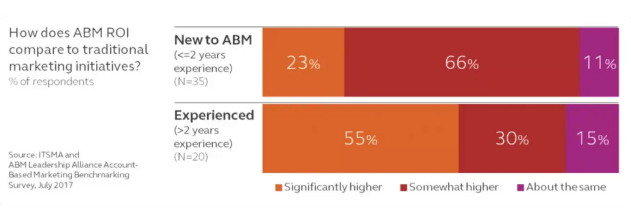
And it's no wonder: in a ITSMA research with the ABM Leadership Alliance, 87% of respondents said that ABM programs offer better results than any other marketing investment.
When the entire market enters a recession (in this case, due to the pandemic), it is natural for communication investments to decrease or turn solely to strategies with proven high ROI.
In another DemandGen study, focused on the US market, 76% of respondents said that ABM strategies offer superior ROI compared to other marketing strategies. When the same question is asked to respondents from a The CMO Survey study, which analyzes marketing during the pandemic, 87% of respondents assume that ABM exceeds the ROI of any other marketing strategy.
Also in the DemandGen study, Account-Based Marketing is pointed out as the strategy with the highest investment prioritization, being cited by 61% of respondents.
That same ITSMA research, cited above and also focused on the US market, shows that 27% of B2B marketing budgets across the country are being allocated, in some way, to ABM programs.
In Brazil, however, the numbers - besides being difficult to find - still leave much to be desired.
Despite 76% of DemandGen study respondents expecting personalized service regarding their marketing needs, only 17% of marketing budgets in the country are allocated to ABM, according to SalesForce research.
And even more alarming than that, is knowing that only 31.3% of Brazilian companies use marketing and sales tools that connect - something essential for Account-Based Marketing to happen, according to the Digital Marketing and Sales Maturity Research in Brazil.
But it doesn't stop there.
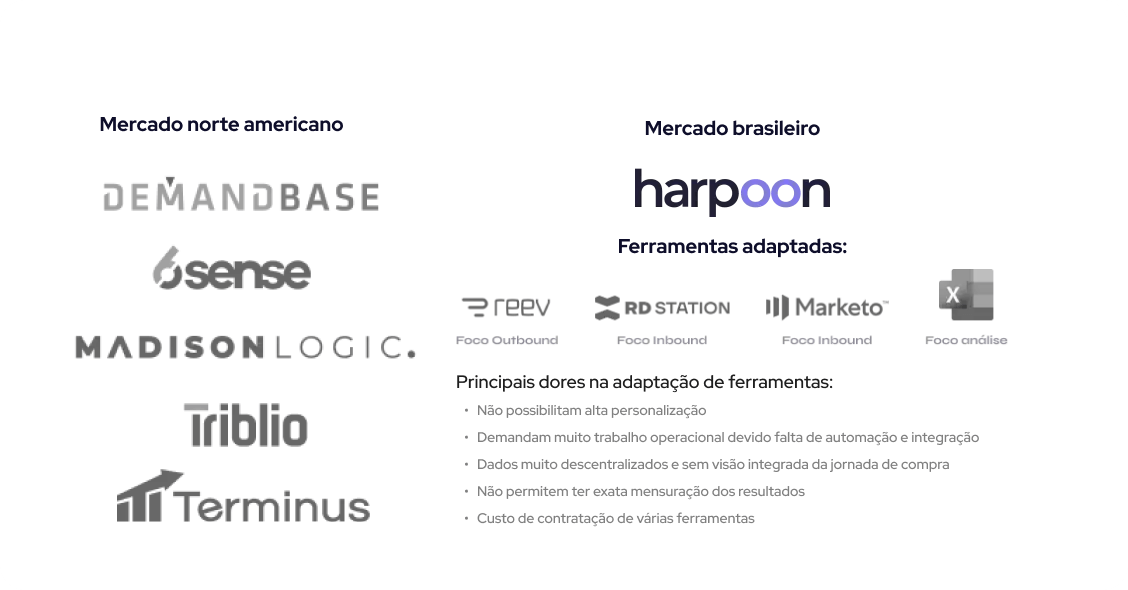
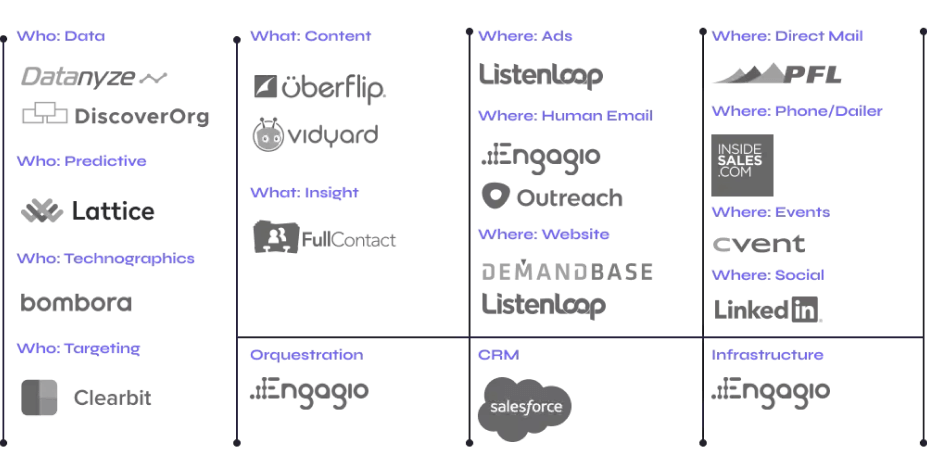
When we talk about tools for ABM in Brazil, the hole is deeper.